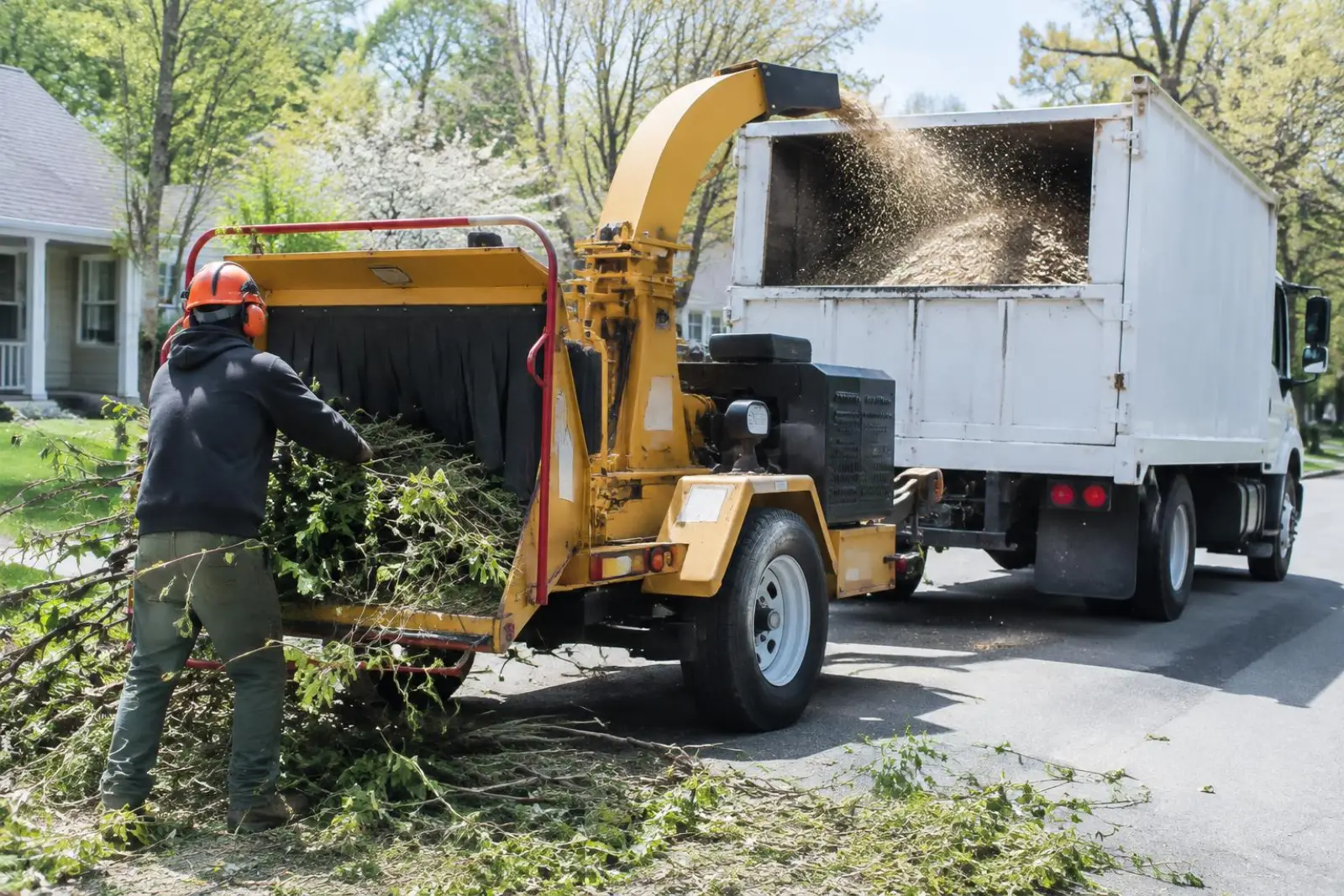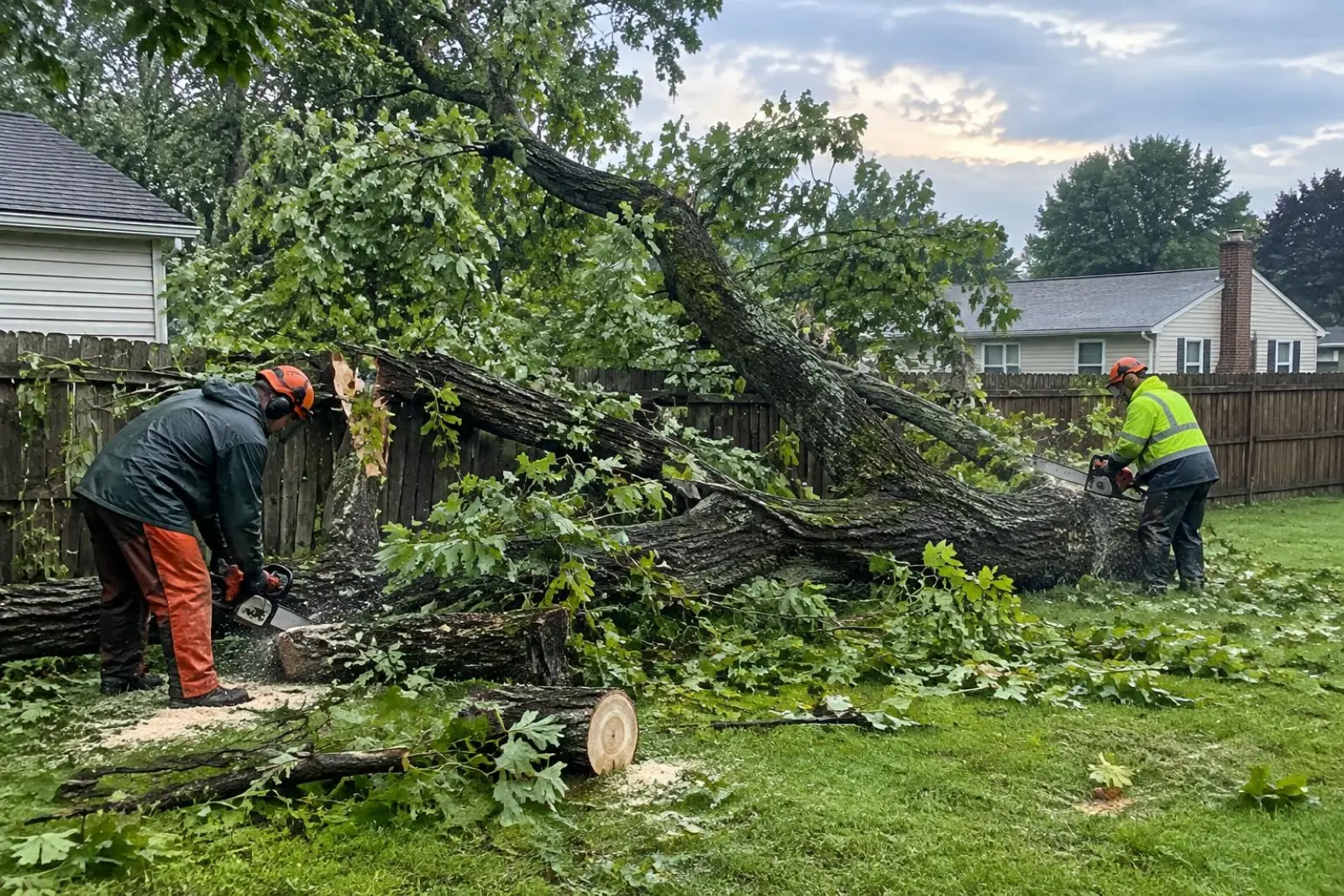
Living near Lake Erie means sudden summer thunderstorms, strong autumn winds, and lake-effect snow that can pile heavy, wet weight onto branches. You can't stop the weather, but a few hours of preparation can greatly reduce what it does to your trees and your house.
1. Walk your property with fresh eyes
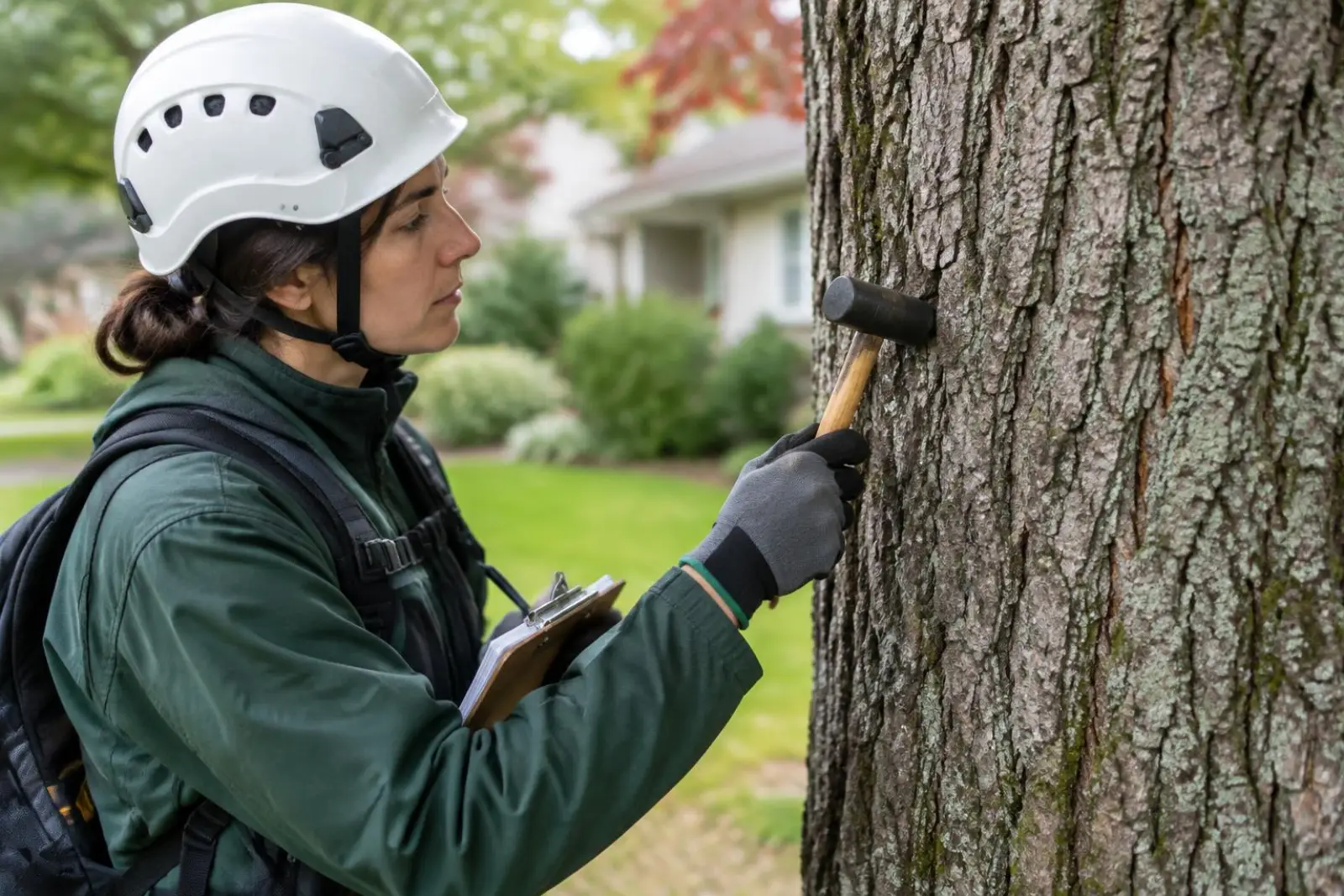
Pick a calm, clear day and walk around every tree that could reach your house, garage, driveway, or a neighbor's property. Look up. You're looking for:
- Dead branches — they're often lighter in color, have no leaves or buds, and may have bark peeling off.
- "Hangers" — broken limbs caught in the canopy from a previous storm.
- Tight V-shaped forks with a crack or seam running down from the joint.
- Cavities, fungus, or oozing sap on the trunk.
- Soil cracks or raised roots on one side of the base.
2. Deal with dead wood first
Dead limbs are the most common cause of storm damage we see. They snap easily, and they're usually the first thing to come through a roof or windshield. Removing them is routine work and one of the best values in tree care.
3. Thin dense canopies — carefully
A very dense crown acts like a sail. Selective thinning lets wind pass through. The key word is selective: removing too much, or "lion-tailing" a tree by stripping its inner branches, actually makes it more vulnerable.
4. Support weak forks
Large trees with two co-dominant stems can be reinforced with a flexible steel cable installed high in the canopy. It doesn't make the tree indestructible, but it significantly reduces the chance of one half splitting away.
5. Keep branches off the roof
We recommend at least 6 to 10 feet of clearance between branches and your roof. That limits damage from swaying limbs, keeps gutters cleaner, and makes it harder for squirrels to get into your attic.
6. Know who to call — before you need to
Save our number, (412) 265-5158, along with your electric utility's outage line and your insurance agent's number. If a tree falls on a line, stay at least 30 feet away and call the utility first.
7. After the storm
Take photos of any damage before anything is moved. Don't attempt chainsaw work on trees under tension or on a roof — that's where most serious tree-related injuries happen. Call a professional, and keep the invoice for your insurance claim.

Owner of Phoenix Firstmerchants Inc. in Geneva, Ohio.
Keep reading
- Seven Signs It's Time to Remove a Tree (and Three Signs It Isn't)
- Stump Grinding vs. Stump Removal: Which One Do You Actually Need?
Related services: Tree Removal, Tree Trimming & Pruning, Stump Grinding, Storm Damage Cleanup.