Tree Removal
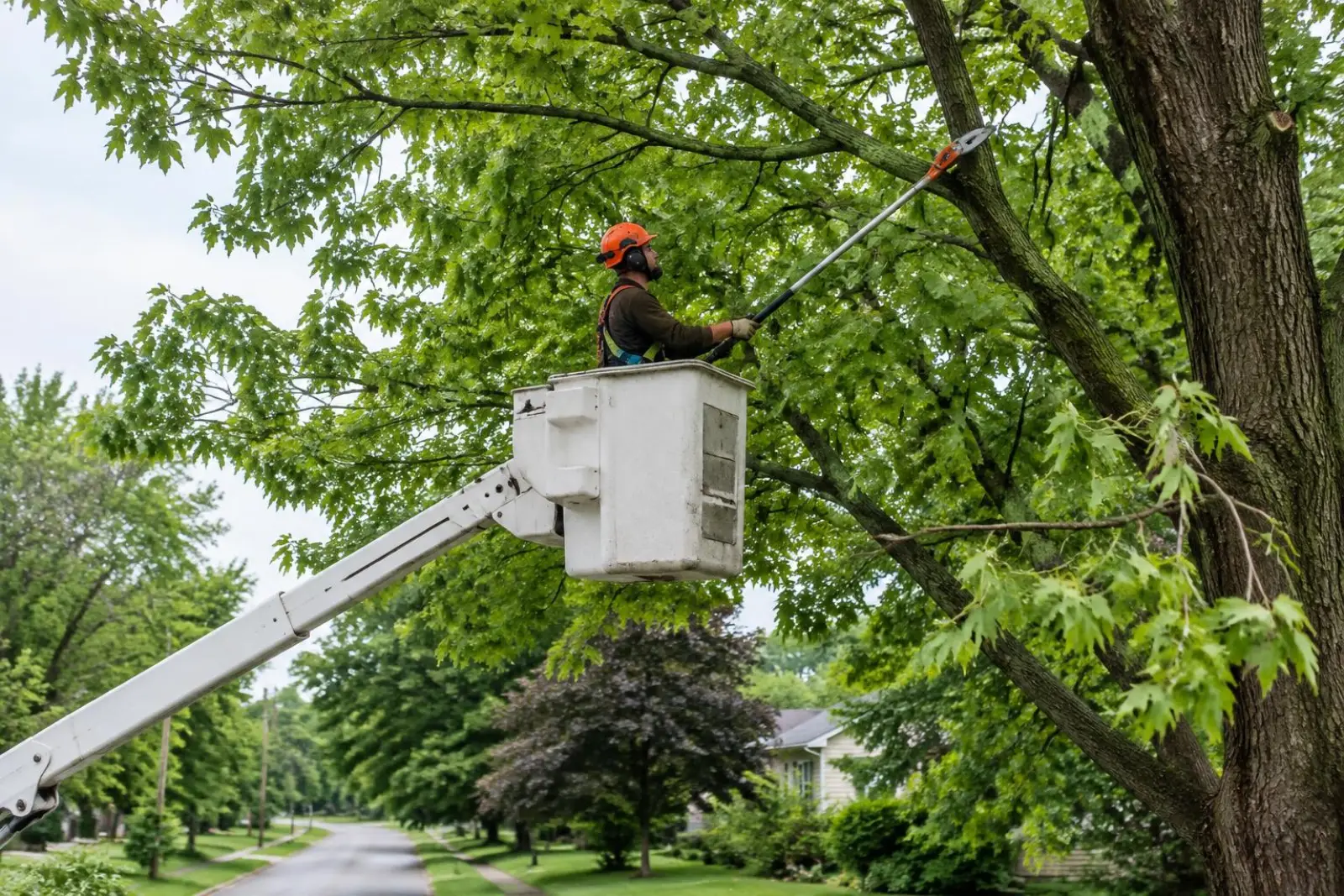
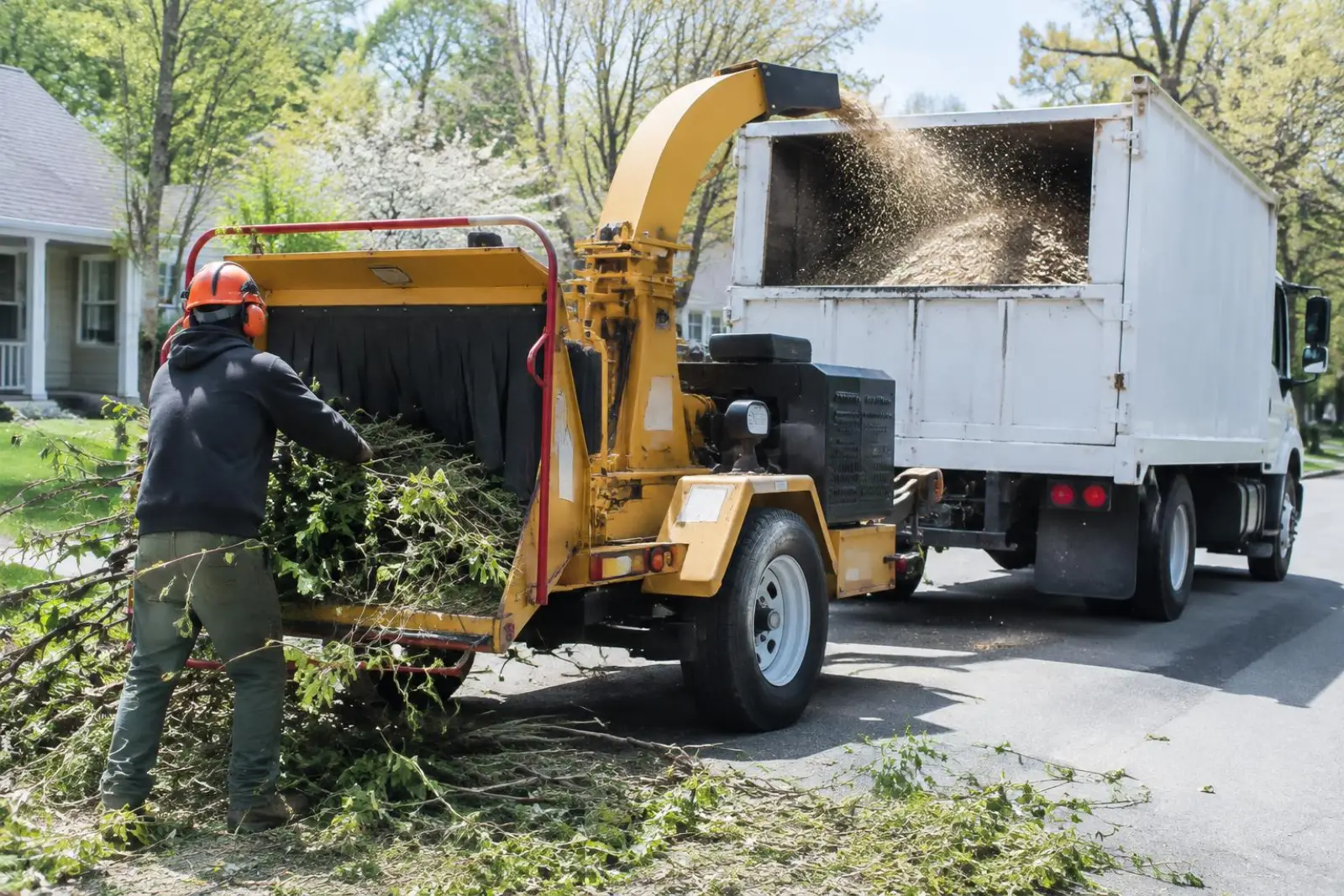
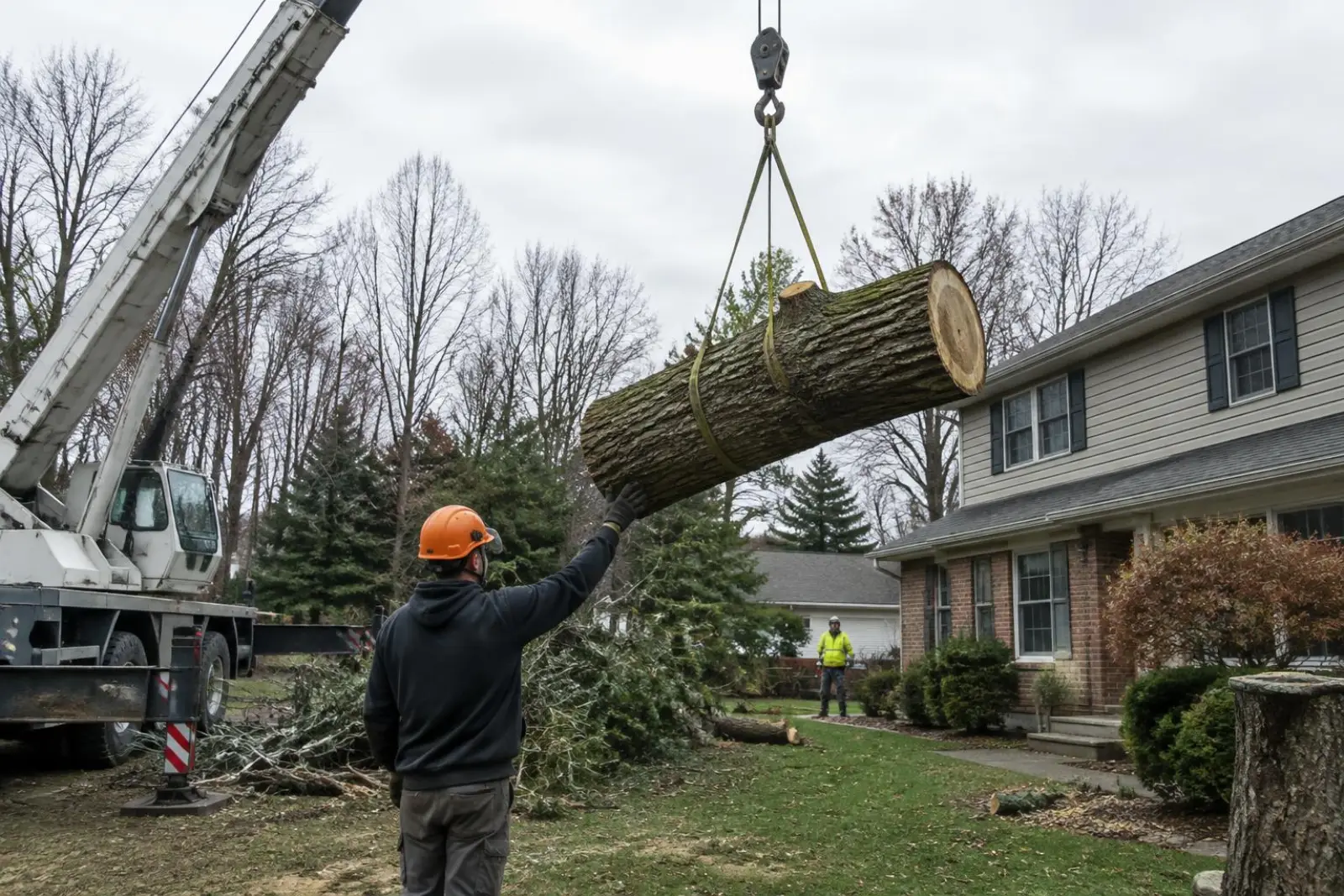
Some trees simply have to come down. When they do, we take them apart piece by piece, protect everything underneath, and leave the yard cleaner than we found it.
Learn more about Tree RemovalNot every worried-looking tree needs to come down. A careful inspection tells you what's really going on — and what (if anything) needs to be done.
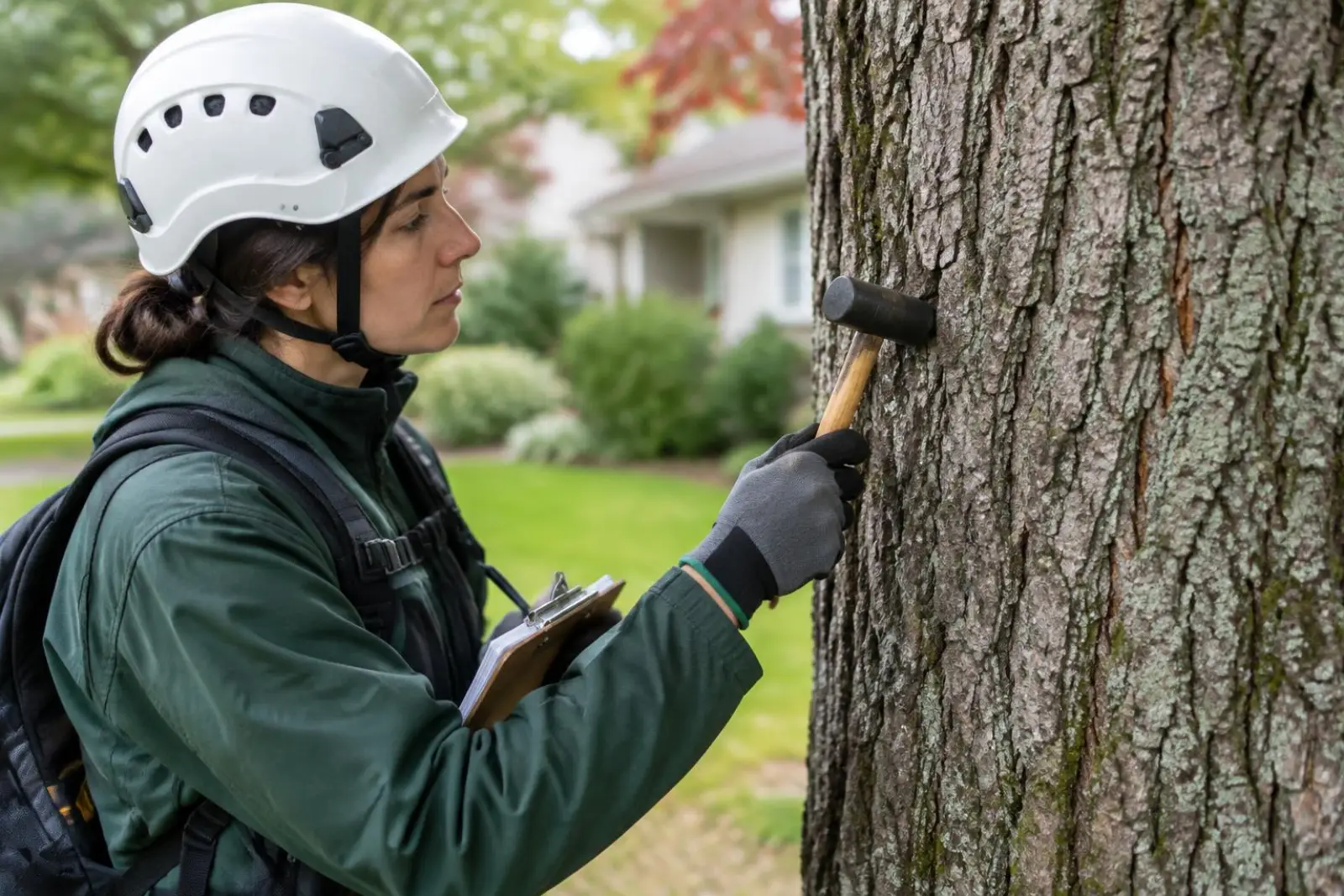
During a tree inspection we look at the whole tree from the roots up: the root flare and soil around the base, the trunk for cracks, cavities and fungal conks, the major forks for weak unions, and the canopy for dieback, dead wood and signs of pests. We sound the trunk with a mallet to listen for hollow areas and use a probe where we suspect decay. You'll get a plain-English summary with photos and clear recommendations ranked by priority.
Common problems we see in Ashtabula and Lake County include emerald ash borer in ash trees, oak wilt and bur oak blight, maple decline from compacted soil, spongy moth caterpillars, and root damage from construction. Some can be treated, some can be managed, and some mean it's time to plan a removal before the tree becomes a hazard.
For trees worth saving we offer structural support systems — flexible steel cables and through-bolt braces that reduce the risk of a weak fork splitting apart — along with deep-root fertilization, mulching and soil decompaction. We'll always tell you honestly when a treatment is unlikely to pay off.
Not sure? Send us a photo — we'll tell you honestly whether it's something to worry about.
Leaves are smaller, thinner or turning color early
Mushrooms or shelf fungi on the trunk or roots
Bark is falling off or has D-shaped exit holes
Construction happened within the tree's root zone
A large tree hangs over the house or a play area
A split is forming where two big stems meet
A standard inspection of up to three trees on one property is $95, which is credited toward any work you book with us within 60 days. Cabling typically costs $250–$650 per tree.
Every estimate is free and written. The price includes cleanup — we don't add surprise charges for raking or haul-away.
Try the price estimatorIf an ash tree still has most of its canopy, systemic treatments can protect it from emerald ash borer, but they need to be repeated every two to three years. Once more than about 30–40% of the crown has died, removal is usually the safer and less expensive choice.
Not necessarily. Trees can stay strong with a surprising amount of hollow trunk if the remaining shell wall is thick enough. That's exactly what an inspection is for.
We do not apply restricted-use pesticides. When a treatment requires a licensed applicator, we'll refer you to a trusted local provider and coordinate the rest of the care.
Some trees simply have to come down. When they do, we take them apart piece by piece, protect everything underneath, and leave the yard cleaner than we found it.
Learn more about Tree RemovalGood pruning is the cheapest insurance a tree can get. We remove what's dead, weak or in the way — and leave the rest of the tree alone so it keeps growing strong.
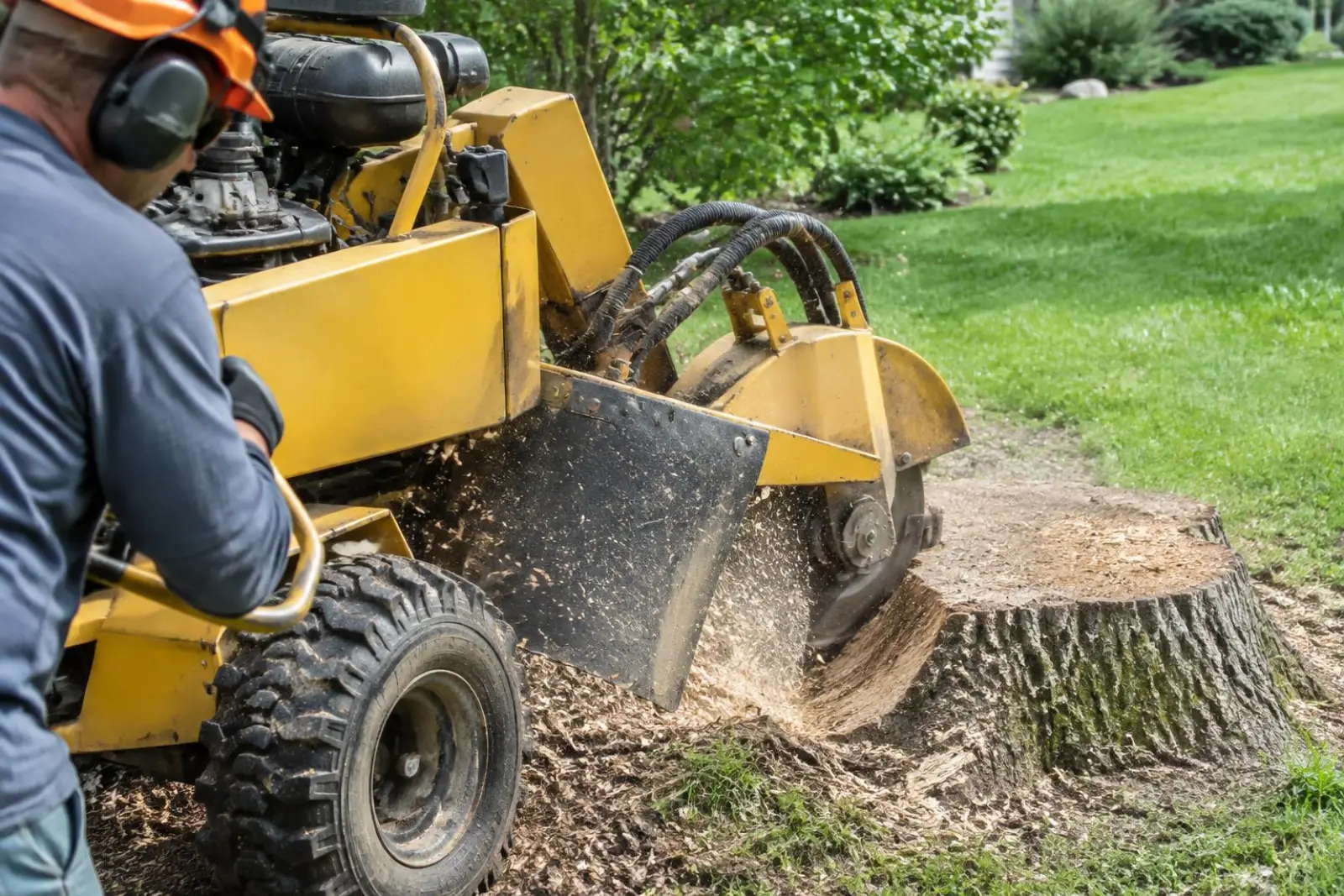
Learn more about Tree Trimming & PruningAn old stump is a trip hazard, a mower-blade killer and a welcome mat for carpenter ants. We grind it away in an afternoon and leave the spot ready for grass or a garden bed.
Learn more about Stump GrindingTell us what's going on. We'll come out, take a look and give you a clear written price — free and with no pressure.
Choose which optional cookies you allow. You can change this any time from the footer.
Your browser is sending a Global Privacy Control signal, so optional cookies stay off.
Remembers your cookie choice and keeps the site secure.
Anonymous statistics about visits and popular pages.
Measures ad performance on Microsoft Bing and Google (e.g. Microsoft UET).